
Streamline Your Client Intake Process
For solo practitioners and small law firms, the client intake process represents one of the most critical yet time-consuming aspects of running a successful practice. Every potential client who reaches out represents an opportunity—but without an efficient system in place, those opportunities can slip through the cracks. Missed calls go unreturned, intake forms sit incomplete, and valuable leads grow cold while attorneys juggle the demands of active cases. This is precisely where legal automation transforms the game, turning what was once a chaotic, manual process into a streamlined, client-centered experience that captures every opportunity and converts more prospects into paying clients.
The traditional client intake process is riddled with inefficiencies that cost law firms both time and money. Consider the typical scenario: a potential client calls during business hours, but the attorney is in court or meeting with another client. The call goes to voicemail, and by the time the attorney returns the call hours later, the prospect has already contacted three other firms and retained one of them. Studies consistently show that the first attorney to respond to a potential client inquiry wins the case the majority of the time. In a competitive legal market, response time is not just a convenience—it is a decisive factor in client acquisition.
Legal automation addresses this challenge head-on by ensuring that no inquiry goes unanswered, regardless of when it arrives or how busy the firm may be. Automated systems can immediately acknowledge receipt of inquiries through SMS, email, or web chat, letting potential clients know that their matter is important and that someone will follow up shortly. This immediate acknowledgment dramatically increases the likelihood that the prospect will wait for your call rather than moving on to a competitor. But automation goes far beyond simple acknowledgments—it can intelligently gather preliminary information, qualify leads based on practice area and case type, and even schedule initial consultations without any manual intervention.
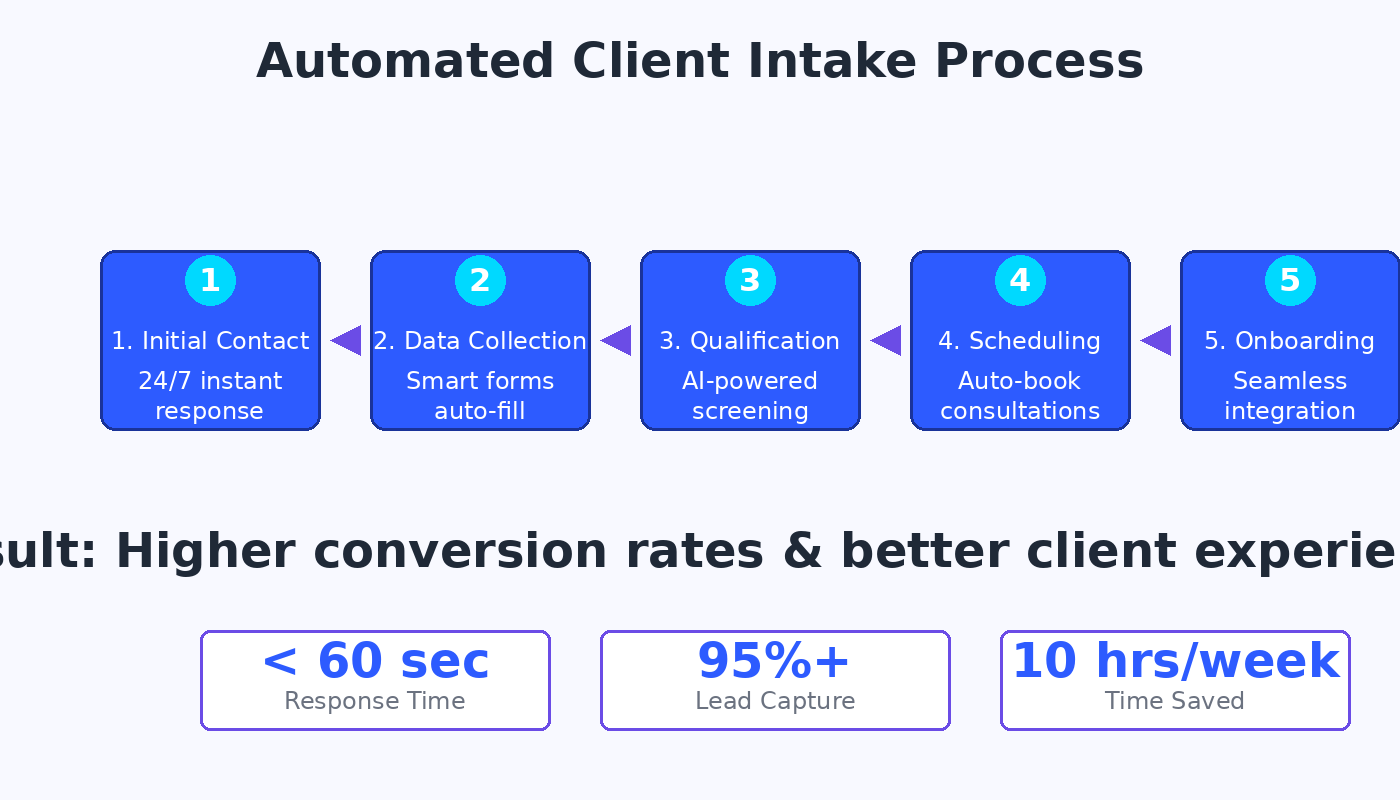
The benefits of automating client intake extend throughout the entire onboarding process. Once a potential client expresses interest, automated workflows can guide them through completing detailed intake questionnaires that gather all the information the attorney needs before the first consultation. These digital forms can be customized for different practice areas, ensuring that a personal injury intake captures different information than an estate planning intake. The data collected flows directly into the firm's case management system, eliminating the need for manual data entry and reducing the risk of errors that can cause problems down the line.
For law firms that handle high volumes of inquiries, automation provides the scalability that would otherwise require hiring additional staff. A single automated system can handle hundreds of simultaneous inquiries, responding instantly to each one while collecting and organizing information in a consistent, reliable manner. This consistency is crucial for maintaining professional standards—every potential client receives the same high-quality experience, regardless of when they reach out or how busy the firm may be. The result is a more professional image that builds trust from the very first interaction.
Beyond the immediate benefits of capturing more leads and improving response times, automated client intake generates valuable data that helps firms optimize their marketing and business development efforts. By tracking where inquiries come from, which marketing channels generate the highest-quality leads, and what percentage of inquiries convert to consultations and retained clients, firms gain insights that inform strategic decisions. This data-driven approach allows firms to allocate marketing resources more effectively, focusing on channels that deliver results rather than guessing about what works.
The integration capabilities of modern legal automation platforms ensure that client intake does not exist in isolation but rather connects seamlessly with other aspects of firm operations. When a new client completes an intake form, the information can automatically populate the case management system, generate conflict checks, create calendar entries for consultations, and trigger follow-up sequences that keep the client engaged throughout the decision-making process. This interconnected approach eliminates the silos that traditionally plague law firm operations, creating a unified system where information flows smoothly from one stage to the next.
Security and compliance considerations are paramount when handling sensitive client information, and reputable legal automation platforms are designed with these concerns in mind. Encrypted data transmission, secure storage, and compliance with legal industry standards ensure that client information remains protected throughout the intake process. Many platforms also include features that support compliance with ethics rules regarding client communication and record-keeping, giving attorneys peace of mind that their automated systems meet professional responsibility requirements.
The implementation of automated client intake does not require firms to abandon the personal touch that distinguishes excellent legal service. Rather, automation handles the routine, repetitive aspects of intake—the data collection, the initial responses, the scheduling logistics—freeing attorneys and staff to focus on the high-value interactions that truly require human judgment and empathy. When an attorney finally speaks with a potential client, they come to the conversation fully prepared, having already reviewed the intake information and identified the key issues. This preparation leads to more productive consultations and demonstrates to clients that the firm values their time.
The return on investment for automated client intake becomes evident quickly. Firms consistently report significant increases in lead conversion rates, reduced administrative costs, and improved client satisfaction scores after implementing automation. The time previously spent on manual data entry, phone tag, and scheduling coordination can be redirected to billable work or business development activities that generate revenue. For solo practitioners especially, this time savings can mean the difference between working sustainable hours and burning out from administrative overload.
As the legal industry continues to evolve, client expectations are evolving with it. Today's clients expect the same convenience and responsiveness from their law firms that they experience from other service providers. They want to be able to reach out at any hour, receive immediate acknowledgment, and complete paperwork digitally rather than printing, signing, and scanning documents. Firms that meet these expectations position themselves as modern, client-focused practices, while those that cling to outdated processes risk appearing out of touch.
The transformation of client intake through legal automation represents just the beginning of what technology can do for law firms. Once the intake process is optimized, the same principles can be applied to client communication, document generation, billing, and countless other aspects of practice management. The firms that embrace this transformation today will be the ones that thrive tomorrow, delivering exceptional client experiences while operating more efficiently than ever before.

